
Tourism in Peru and the El Niño Phenomenon (FEN)
Peru is a country of great extension, comparable in size to Portugal, Spain and France combined. It is also extraordinarily diverse: the Coast, Andes and Amazon have very different geographical and climatic conditions.
This diversity makes the country a unique destination for its landscapes, culture and gastronomy, but it also means that climatic phenomena such as El Niño do not affect all regions in the same way or at the same time.
Does the El Niño phenomenon affect my trip to Peru?
We must first understand that the El Niño phenomenon is related to an abnormal warming of the waters of the Pacific Ocean that modifies weather patterns. In Peru, its effects can include above-normal temperatures on the coast and, during certain periods, rainfall capable of generating river floods and floods.
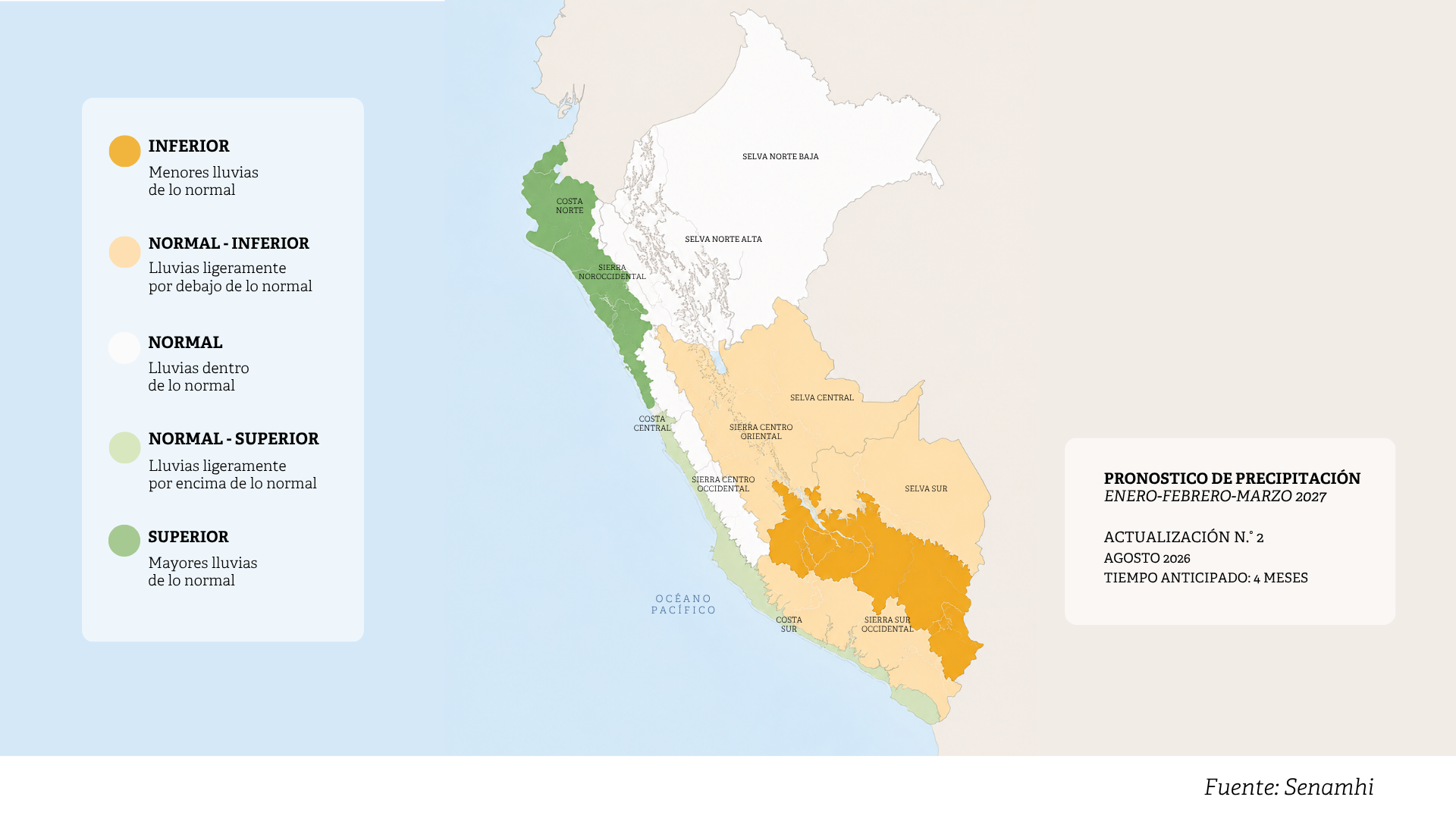
Currently, the Peruvian authorities maintain permanent monitoring of the El Niño phenomenon. According to current scenarios, the period between December 2026 and March 2027 could concentrate its main impacts on the country's coast. Projections contemplate the possibility of above-normal rainfall mainly on the north and central coast, as well as greater rainfall in sectors of the southern coast.
Destinations such as Tumbes, Piura, Lambayeque and La Libertad could experience higher temperatures and heavier rainfall. These conditions can cause temporary interruptions in roads, modifications of excursions or access difficulties in certain areas.
This does not mean that the entire country is affected in the same way. Conditions and potential impacts will depend on each region and time of travel.
Is it safe to visit Cusco, Machu Picchu and Lake Titicaca during the FEN?
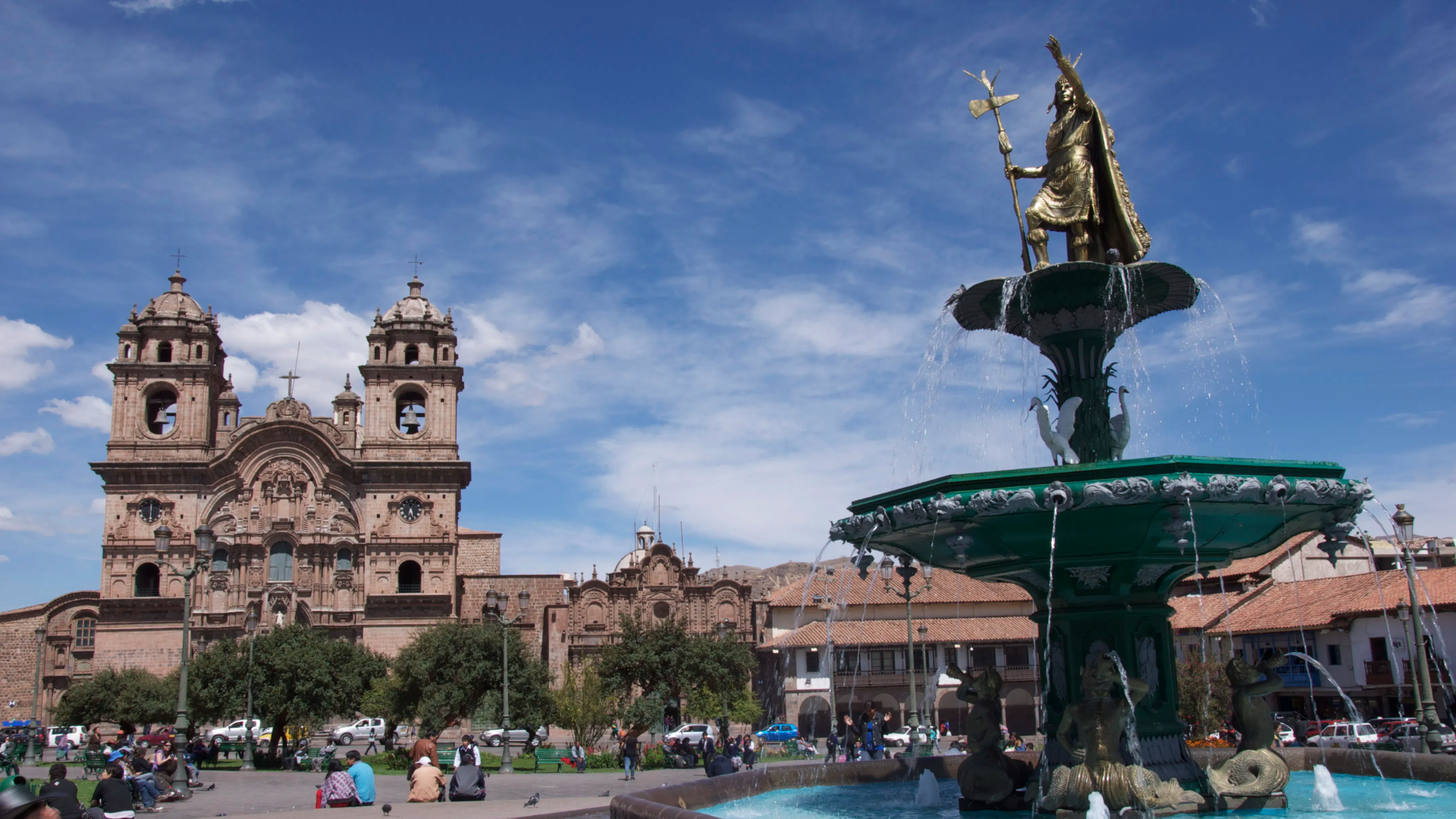
Cusco and Machu Picchu have a different weather pattern than the north coast. Current scenarios foresee normal to lower rainfall conditions for sectors of the southern highlands during the summer of 2026–2027.
This does not mean that the tourist operation in Cusco and Machu Picchu will stop. The preventive measures that are usually adopted during the rainy season will be maintained as part of the operation.
As it happens every year, the
Inca Trail will be closed during February for conservation and maintenance work. During this period, the railway operation to Machu Picchu adapts to the conditions of the season, with services from Ollantaytambo.
The main tourist attractions in Cusco will remain open to the public, subject to the operating conditions and official provisions in force.
What is the scenario in Lima and the central coast?
Lima is located in the valley of the Rimac River and is a city where rainfall is very infrequent during the year. Therefore, its infrastructure is not designed to receive intense rainfall. In the event of unusual episodes of rain, there may be occasional flooding in certain sectors, although this does not mean that the entire city is affected or necessarily its main tourist areas.
In Lima, El Niño is usually felt mainly through
higher sea and ambient temperatures, as well as higher humidity and the possibility of unusual weather conditions.
The heaviest rains can affect the mountain areas of the Lima region and the valleys of the rivers on the coast. There are also dry streams that can be activated in the face of intense rainfall.
Therefore, we suggest avoiding road trips to the center and south coast of the country during this period.
In the city, visits to the Historic Center, Barranco, Miraflores, museums, gastronomic experiences and other urban activities can continue to develop normally as long as local conditions allow it.
Can my Peruvian Amazon cruise be affected?
The Amazon has its own climatic dynamics. Iquitos and Puerto Maldonado, for example, have rainfall for a good part of the year, regardless of El Niño.
Variations in rainfall and river levels can change certain experiences or excursions, but they are also part of the nature of traveling through a tropical ecosystem.
This does not necessarily imply the suspension of a trip through the Amazon. In these destinations, the ability to adapt excursions and operations to local conditions is particularly important.

Is it safe to travel to Peru during El Niño?
Peru is a large and diverse country:
what happens in the north does not necessarily happen in the same way in the south or in the Amazon.
One of the main impacts associated with El Niño is the intense rains that may affect certain cities on the north and central coast. Many of these cities are located in valleys crossed by rivers that descend from the Andes to the sea, so the increase in their flows can affect nearby towns and roads. There are also dry streams that can be activated by heavy rains.
Therefore, it is especially important to have up-to-date information if you are travelling by road.
At VIPAC we have integrity, responsibility and sustainability as values. We manage our operations based on
official, up-to-date and localized information, which allows us to anticipate possible scenarios and adapt our services when conditions require it.
For this reason, we share a map developed by the National Meteorology and Hydrology Service of Peru (SENAMHI), which allows us to observe the expected rainfall scenario for each region of the country for the period January-March 2027.
The importance of traveling with local planning and support
A well-designed itinerary should consider alternatives. If a road presents difficulties, it may be necessary to modify schedules. If the weather conditions make a certain excursion undesirable, it can be replaced by another experience. If there is an official alert, the programs can be rearranged before the traveler arrives at the destination.
In situations of this type, having local teams is especially important.
At
VIPAC, our Operations and Assistance teams permanently monitor the conditions of the destinations in which we operate. Our presence in Lima, Cusco, the Sacred Valley and Machu Picchu allows us to receive information from the field and react quickly when circumstances require modifications.
Our mission is to anticipate, evaluate possible scenarios and act quickly when necessary.
Can the forecasts change?
Yes. Climate phenomena are constantly evolving, and forecasts can change as well. As such, decisions about a trip scheduled for several months from now should not be based solely on headlines or images corresponding to a specific location.
Peruvian authorities regularly update their assessments and scenarios. As each season approaches, we'll have more accurate information about the regions that could experience the greatest impacts.
Our recommendation is
to maintain the planned programs. VIPAC will continue to periodically review official information and conditions reported by our local teams and partners to adapt operations when necessary.
Peru will continue to receive travelers
The El Niño phenomenon is part of the climatic reality of the Pacific and Peru has lived with different episodes throughout its history. We should not ignore it, but neither should we assume that it means the paralysis of tourism in the country.
Preparation, permanent monitoring, communication, and operational flexibility are the best tools to respond to changing scenarios.
Peru is more than just a route
This situation also reminds us of one of the great advantages of traveling in Peru:
the diversity of experiences that the country offers.
If certain weather conditions temporarily affect a region, there are numerous destinations and experiences that can be incorporated or adapted within an itinerary.
Get to know our
Beyond catalog of New Routes. Peru offers alternatives such as Arequipa and the Colca Valley, Paracas and Ica, the Amazon, the archaeological north, Chachapoyas and a growing variety of cultural, gastronomic and nature experiences.
Flexibility will be one of the most important aspects of travel over the next few months.
VIPAC Commitment: Sustainable and Responsible Travel
At VIPAC we will continue to monitor the evolution of El Niño and keep our partners and travelers informed about any situation that may affect their itineraries.
Because getting to know Peru also means understanding its geography, adapting to its nature and discovering that, behind each region, there is always a new experience waiting for the traveler.